


PCB Central Contracts 2026: Tracks AB, A, BC, C & D Explained
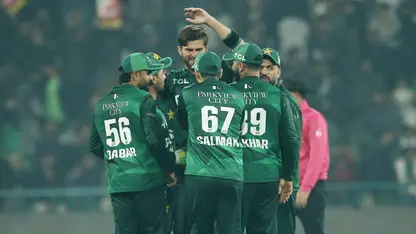

Pakistan (Source: PCB)

Published - 16 Jun 2026, 06:37 AM• Read time - 4 mins
The Pakistan Cricket Board (PCB) has come forward with a revolutionary contract system for its players, which will now classify them on the basis of the format they specialise in. The new system has been brought into place to work in harmony with the modern-day reality of the game, where Test cricket needs to be preserved, while players must also have the freedom to ply their trade in franchise T20 leagues.
Considering the requirements of the modern-day cricketing ecosystem, the PCB has now brought in a new framework, where players are put under five format tracks, replacing the previous four pay grade categories, which were A, B, C and D.
How are players classified into new track systems?
The five format tracks are AB (for Test and ODIs), A (Test specialists), BC (ODI and T20Is), C (T20I and franchise specialists), and D (Development track for next gen players).
Track AB (Dual Format - Test & ODI) – The first track will be PCB’s highest commitment tier and will include Pakistan's premier multi-format cricketers, who are an integral part of both the Test and ODI sides. In some circumstances, an AB player might still be selected for a T20I, and their performances will be evaluated, but an AB cricketer won’t be considered as a short-format player.
Track A (Test Specialists) – To protect Test cricket in the era of franchise T20 leagues, the PCB has formed a special track to safeguard the interests of those who choose to fully dedicate themselves to the longest format.
Since red-ball cricket offers players the least earning opportunity outside national commitments, the new framework is designed to reward those who commit to it. The move has been made to ensure that choosing red-ball cricket for Pakistan doesn’t come at a personal cost for players.
Track BC (T20I & Franchise Specialist) – The third track will consist of players who are dedicated to the shortest format and will be given the freedom to pursue franchise cricket around their national commitments.
Track D (Development / NCA) – It will be a development track for the next generation, with the sole focus on investing in young players through the National Cricket Academy and the wider high-performance system.
Every contracted player will be assigned to a defined format pathway, whether focused on red-ball cricket, white-ball cricket, or T20Is. Each player's designated pathway will determine both the expectations placed on them by the board and the support and opportunities they receive in return.
PCB to not disclose track details of players
A player will only be evaluated in comparison against others in the same track and not against someone who’s playing a different format. Furthermore, each track will have two internal tiers and players will be promoted or demoted within their respective tracks every year on the basis of their performances. However, the Development track is a single-tier system, reflecting its role as an entry pathway.
PCB will not disclose the number of contracts allocated to each track. The number and distribution of contracts are determined during each review cycle and remain a selection matter rather than a fixed, publicly disclosed figure.
A revolutionary move to improve Test performance
Under the new framework, for the first time in Pakistan Cricket’s history, the country’s dedicated Test specialists will be granted permission to play in the premier red-ball competitions of the world's leading cricketing nations.
The move has been made to expose players to the most demanding first-class environments and improve their skillset, which in turn will help improve the national side's performance. However, the Test specialists won’t be allowed to take franchise T20 commitments.
How will players be eligible to earn a central contract?
In order to be eligible for a central contract, a player has to pass through a three gate process:
Gate 1 (Medical & Fitness) – Every player will have to undergo a thorough medical and fitness assessment. The PCB has called it a genuine investment in players' long-term health that will help them catch problems early and lengthen careers. For players seeking franchise opportunities, they will have to get medical clearance before being released, so that fitness to play always comes first.
Gate 2 (Domestic Participation) – Contracted players will have to remain active in domestic cricket to keep themselves match-ready. However, the board has not made it mandatory for players to play a minimum number of games.
Gate 3 (Performance Assessment) – Players will be evaluated within their own tracks and specified pathways.
The new contract system will come into effect after the end of the current cycle, which concludes on June 30.