


Why were runners banned from international cricket? Explained
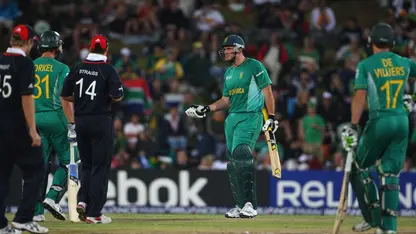

Graeme Smith has a word with Andrew Strauss after being refused a runner during a Group B match of the ICC Men's Champions Trophy 2009 (Source: Getty Images)

Published - 24 Jul 2026, 06:05 PM• Read time - 3 mins
The provision allowing an unbeaten batter a runner in the event of injury during a game was first mentioned in the MCC’s Laws of Cricket as early as 1884. However, the International Cricket Council (ICC) decided to abolish runners, believing the law was being abused by batters on several occasions. The decision was announced in June 2011 following a recommendation from the ICC’s Cricket Committee.
What is striking is how the law managed to survive for so long despite its inconsistencies. It was always difficult for on‑field umpires and the fielding captain to judge the legitimacy of a batter’s request for a runner. In fact, the law did not clarify whether a batter suffering cramps due to dehydration or the length of an innings should be allowed a runner.
Controversy erupted when South Africa captain Graeme Smith was denied a runner in their Champions Trophy 2009 game against England in Centurion on September 27. Chasing 324 to win, Smith requested a runner after cramping, but England captain Andrew Strauss refused, forcing Smith to continue on his own. He was dismissed for 141 on the penultimate ball of the 47th over, and South Africa fell 22 runs short of the target.
“I was cramping quite badly, and I requested a runner,” Smith said after the match. “Andrew spoke with the umpires and turned it down. He felt that if you score a hundred, you’re going to be tired. From my perspective, it felt a touch inconsistent. Guys have had runners for cramps in the past, so there needs to be a degree of consistency. This is the frustration we have.”
Strauss, however, felt Smith did not merit a runner, arguing that “cramping to a certain extent is a preparation thing.”
“He asked me for a runner because he was cramping,” Strauss explained. “The umpires were not particularly keen to give him one. I felt that at the end of a long game, after a long innings, you’re going to be tired. Cramping to a certain extent is a preparation thing. To a certain extent, it’s a conditioning thing. I didn’t feel he merited having a runner at that stage.”
In 2011, ICC chief Haroon Lorgat explained the logic behind removing the law, noting the difficulty for umpires in determining the genuineness of a request. He also stressed that since bowlers cannot continue bowling after suffering an injury mid‑game, it was fairer not to allow batters a runner, thereby bringing more equality into the sport.
“It’s quite a difficult one for umpires to determine whether there has been a real injury to batsmen or whether it was a tactical use of runners,” Lorgat said as reported by Cricinfo.
“If a bowler gets injured, you can’t continue bowling for the rest of the day, and the feeling was that it would be better not to allow the use of runners because there has been abuse in the past,” he added.