


3 things cricket players cannot do while batting
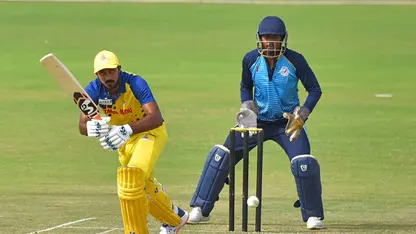

Vijay Shankar bats for Tamil Nadu (Source: Getty Images)

Published - 18 Aug 2026, 07:42 AM• Read time - 2 mins
There’s a reason why most cricketers growing up first pick up the bat. Batters have historically been the most favoured community in the sport, with most of the laws supporting them. From the boundaries getting shorter to make the game more entertaining to the introduction of the powerplay, cricket has favoured the batters heavily in recent times.
However, despite that, there are some things a player can’t do while batting at the crease. The laws of the game place several restrictions on what a batter can do once they take guard. Some of these rules are well known, while others can produce unusual dismissals. Here are three things a batter cannot do while batting:
1. Deliberately Hit the Ball Twice
A batter cannot deliberately strike the ball twice with the bat. The rule was formulated to stop the players from gaining an unfair advantage by controlling the ball after their initial shot.
However, a batter can make a second contact with the ball to protect their wicket if the ball is going on to hit the stumps after the first contact with the bat. A deliberate second hit for the purpose of scoring runs can result in the batter being dismissed.
Also Read: 3 ways a batter can be dismissed without facing a ball
2. Deliberately Catch the Ball
Batters are not allowed to deliberately catch a ball with a hand that is not holding the bat. Doing so can lead to a dismissal under the Laws.
The restriction has been put in place to prevent a batter from simply using their hands to control a delivery after it has been struck. A batter may use their hand to protect themselves from the ball, but deliberately catching it isn’t allowed.
3. Deliberately Obstruct a Fielder
A batter also can’t deliberately obstruct or distract a fielder through their actions or words. If an umpire feels that the obstruction was deliberate, the batter can be given out for Obstructing the Field.
The rule covers situations where a batter intentionally interferes with a fielder attempting to catch or field the ball. It can include physical obstruction as well as deliberate distraction.
The law does not mean every accidental collision or interference results in a dismissal. The umpire has the sole discretion to determine if the batter deliberately obstructed or distracted the opposition.