


MCC weighs in on Salman Ali Agha's run out controversy
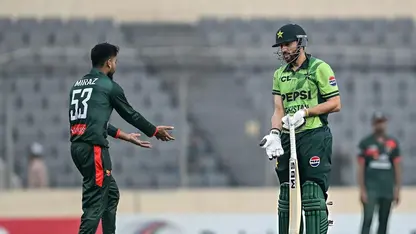

Mehidy Hasan Miraz and Salman Ali Agha (Source: Getty Images)

Published - 18 Mar 2026, 01:14 PM• Read time - 3 mins
The MCC has given its verdict on the contentious run out of Salman Ali Agha, which unfolded during the second ODI of the recently concluded three-match ODI series between Pakistan and Bangladesh. The MCC is blunt in its assessment of the controversy, saying that "there is little that either umpire could have done differently. The non-striker was clearly out of his ground when the wicket was broken, and the ball was in play. That is out."
Widely renowned as the guardians of the laws of the game, the MCC has specified that "no batter should attempt to pick the ball up without the consent of the fielding side," and had Salman done so, "he would have been at risk of an Obstructing the field dismissal." The MCC also suggested that "he would have been better using that time to attempt to regain his ground."

"Under Laws, there is little that either umpire could have done differently. The non-striker was clearly out of his ground when the wicket was broken, and the ball was in play. That is out," the MCC said in a statement.
"It is also worth pointing out that the non-striker had left his ground when the ball was in play and had just started to attempt to regain his ground when he collided with Mehidy. Furthermore, no batter should attempt to pick the ball up without the consent of the fielding side, and had he done so, he would have been at risk of an Obstructing the field dismissal. In retrospect, he would have been better using that time to attempt to regain his ground."
The MCC also quashed the suggestions that the ball should have been treated as Dead as there was a collision between the two players.
"That is not viable under the Laws; the ball does not become dead when players collide – if it did, that would incentivise players to seek out collisions when the situation was advantageous. There was no question of a serious injury, so there could be no call of Dead ball for that. It could not have been clear to the umpire that all the players ceased to consider the ball to be in play, since Mehidy clearly believed it was live, even if Agha did not. And it cannot have been finally settled in the hands of the bowler or wicket-keeper, since it was on the ground," the statement read further.
"Under the new Laws, which will come into effect in October, an umpire will be able to determine that the ball is finally settled if it is stationary on the ground. However, it is hard to make an argument that the ball is finally settled if the nearest fielder to it is attempting to run the non-striker out, with that non-striker out of their ground."
While the MCC agreed that it "would have been possible" for the Bangladesh captain to withdraw his appeal, the decision to do so entirely rested upon the fielding side.
