


Scotland, Netherlands accuse ICC of 'disrespect' over new ODI World Cup format
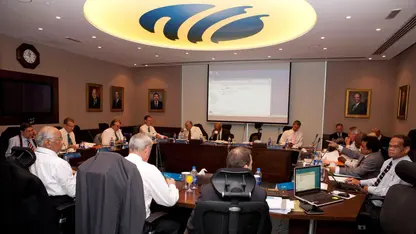

ICC (Source: Getty Images)

Published - 10 Aug 2026, 05:40 PM• Read time - 4 mins
Cricket Scotland and the Royal Dutch Cricket Association (KNCB, the Netherlands Cricket Board) have expressed their disappointment with the ICC’s (International Cricket Council) decision to change the competing format of the Men's ODI World Cup 2027 with less than 18 months to go for the event.
A total of 14 teams will participate in the World Cup, where three teams, qualifying in the 12th, 13th and 14th place, will take part in the Super Series round. Only one team from the three will progress to the Group round and become part of either of the groups, having six teams each. On the other hand, the remaining two teams will be eliminated after playing just two matches each.
The format has attracted severe criticism from associate nations, and Cricket Scotland, the KNCB, and other Associate boards had two meetings with the ICC. The members sought an official written communication on the changes and greater clarity around the processes involved.
However, in a joint statement released by Cricket Scotland and the KNCB, it has been revealed that the ICC hasn’t responded to the aggrieved members for more than two weeks, leading to their disappointment and disrespect on the part of the ICC.
Cricket Scotland and the KNCB have maintained that the recent changes have come as a setback to Associate cricketing nations, which will undermine their progress, especially at a time when the ICC is trying to make cricket a global game.
"No response from ICC is disrespectful"
"These changes represent a setback to Associate Member cricket and risk undermining the progress made in recent years to grow the global game. At a time when cricket is seeking to expand its reach, attract new audiences and strengthen its position on the international sporting landscape, reducing meaningful opportunities for emerging nations sends entirely the wrong message,” said the two boards in a joint release.
"Following the announcement of the changes, Cricket Scotland, KNCB and other Associate Members met twice with the ICC, seeking official written communication on the changes and greater clarity around the processes involved. We also requested positive action to strengthen future operational decision-making and an invitation to bilateral planning meetings with Full Members. Since the second meeting more than two weeks ago, there has been no further response from the ICC, which is disappointing and disrespectful given the significance of the issues raised,” the release said.
The captains of Namibia, the Netherlands and Scotland had also expressed their concerns about the World Cup format change last month in a statement issued by the World Cricketers' Association, cricket’s global players' union. Following that, Namibia Cricket chair Rudi van Vuuren urged associate nations to put the revised 2027 World Cup schedule “into context” and focus on T20 cricket to attain growth.
The joint statement from the Scotland and Netherlands boards also revealed that the Associate Members were not given sufficient notice for the format change, which risks weakening the integrity and credibility of international cricket.
Integrity and credibility of international cricket in question
"The changes risk weakening the integrity and credibility of international cricket, and only highlights the importance of strong governance, transparent decision-making and effective engagement with Members. Decisions of this significance, particularly those directly affecting Associate Members, should be made clearly following meaningful consultation and with sufficient notice for affected Members to understand and respond to the implications,” they said in the statement.
"The timing of these changes, with less than eighteen months until the tournament, has given affected Members limited opportunity to contribute to the process or adapt. We believe greater engagement with Associate Members would have supported a more effective and collaborative approach and help maintain confidence in the qualification pathway,” he said.
By the time the changes were announced in the World Cup format, the World Cup League 2 was nearing its conclusion. USA, Scotland, the Netherlands and Oman had secured places in the ODI World Cup Qualifier. On the other hand, the bottom four sides, Namibia, Canada, Nepal and UAE, were set to contest the eight-team World Cup Qualifier Play-off. The top four teams from that tournament will advance to the global qualifier, scheduled to be held in February 2027.
The Scotland and Netherlands boards also mentioned the struggles of Associate nations while preparing for global ICC tournaments like the World Cup.
Struggles of Associate nations while preparing for World Cup
"Members and their players invest years in preparing for World Cups, and confidence in those pathways depends on them not changing part-way through a qualification cycle without consultation. Changing those structures at short notice creates significant uncertainty, disrupts planning, and places additional operational and financial pressure on organisations that are already operating with limited resources. The opportunity to compete at a World Cup provides Associate Members with a unique competitive opportunity to drive investment, inspire players, attract commercial partners and government support, and create moments that capture the imagination of supporters,” the statement said.
"Some of the most memorable moments in ICC tournaments have come when Associate Members have challenged, and in some cases defeated, Full Members on the world stage. Those performances have always reinforced the principle that success is earned on the field. Our players work incredibly hard with limited resources to earn these opportunities and deserve respect and for their efforts to be rewarded,” the statement added.
"Leaders in cricket have consistently spoken about their ambition for the sport to become truly global. We call upon the ICC to re-engage with Associate Members and their requests and commit to engaging openly with all Members on how the long-term interests of the global game can best be served,” the two boards said in a statement.