


T20 World Cup 2026: 3 Pakistan players who were underutilised
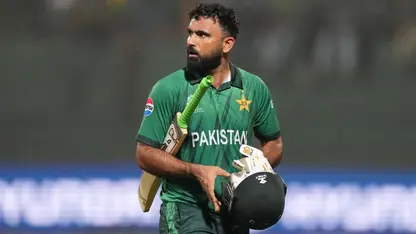

Fakhar Zaman (Source: Getty Images)

Published - 12 Mar 2026, 09:30 AM• Read time - 3 mins
Pakistan’s T20 World Cup 2026 campaign will be remembered for its muddled thinking as much as its early exit. In a format that rewards clarity and boldness, Pakistan second‑guessed themselves into caution, leaving three potentially decisive players underused.
Here’s how three of their key players became symbols of a campaign that never fully trusted its own resources.

Naseem Shah
Naseem Shah spent almost the entire tournament watching from the dugout, only getting a game in Pakistan’s final Super Eight fixture against Sri Lanka. Even in that lone outing, he made an immediate impact, removing Pathum Nissanka, Sri Lanka’s most prolific batter in the tournament, for just 3, before he could inflict damage.
Naseem finished with 1 for 36, a respectable return as it was a batting-friendly deck that saw the highest match aggregate (419) involving Sri Lanka and Pakistan.
What made his omission harsher was the form he carried into the World Cup. For Desert Vipers in the ILT20, Naseem had been outstanding: 12 wickets in eight games at an economy of 6.97, playing a pivotal role in their title win.
Pakistan, though, chose to park that form. In a campaign where they often looked short of incisiveness with the ball at key moments, leaving a high‑class, in‑rhythm seamer like Naseem on ice felt less like strategy and more like stubbornness.
Fakhar Zaman
If there is one batter in Pakistan’s white‑ball setup who embodies intent in the best possible way, it’s Fakhar Zaman. Pakistan’s decision to bench him at the start of the tournament never quite added up.
Fakhar is one of their most destructive batters, with a history of match‑winning knocks in ICC events and bilateral series. Yet he watched on while Pakistan persisted with a batting order that looked stuck in first gear. The most contentious part of that call was the continued backing of Babar Azam, who clearly struggled for form and fluency. On evidence, Fakhar for Babar was not a wild punt; it was a legitimate tactical option.
When Fakhar finally got his chance, he did exactly what his omission had been crying out for. Against Sri Lanka, he smashed 84 off 42 balls at a strike rate of 200.00, tearing into the bowling and setting up a five‑run win that allowed Pakistan to at least finish on a high.
Pakistan didn’t just underuse Fakhar; they undercut the very intent they claimed to be chasing.
Khawaja Nafay
If Fakhar represented ignored experience, Khawaja Nafay represented unexplored potential. Pakistan had a clear opportunity to start him as their designated wicketkeeper‑batter instead of Usman Khan, but decided against it.
Usman’s tournament began in the worst possible way: back‑to‑back ducks against Netherlands and USA. When he did finally get runs, his top score of 44 came against India at a strike rate of 129.41 in a chase of 176. On a day when Pakistan needed someone in the middle order to shift gears decisively, that tempo simply wasn’t enough.
Nafay, by contrast, came in with no international baggage and a growing reputation from the domestic circuit. He offered something Pakistan badly needed: a fresh template, unscarred by recent failures, with the potential to play with freedom rather than fear. Even if he had failed, the selection would at least have aligned with the rhetoric of renewal.
Instead, Pakistan stuck with a struggling option and never truly tested the alternative. Nafay became the “what if” of their campaign, a reminder that sometimes the bravest call is simply to try something different.
A talent problem, or a trust problem?
Pakistan’s early exit will inevitably trigger familiar debates about personnel, systems, and domestic structures. But this World Cup also told a simpler story: they did not lack players who could have changed games; they lacked the courage and clarity to use them.
