


West Indies legend Sir Garfield Sobers dies at 89
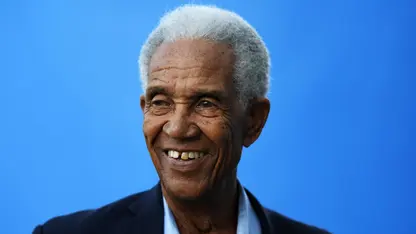

Sir Garfield Sobers (Source: Getty Images)

Published - 17 Jul 2026, 07:33 PM• Read time - 2 mins
Legendary West Indies all-rounder Sir Garfield Sobers died on Friday, July 17. Sobers breathed his last at his home in Barbados at the age of 89. He is touted as the greatest all-rounder in the history of sport for his remarkable exploits with both bat and ball. Sobers scored 8032 runs and scalped 235 wickets from 93 Test matches.
He had an astonishing average of 57.78 with the bat, having hit 26 centuries and 30 half-centuries in his career. Sobers could bowl left-arm orthodox and wrist spin, along with left-arm fast medium and was also an exceptional fielder and close-in catcher.
He’s famously known to be the first batter in history to smash six sixes in an over, achieving the feat while playing for Nottinghamshire against Glamorgan’s Malcolm Nash.
Sobers even captained West Indies in 39 Test matches, winning nine, losing 10, while 20 were drawn. He even held the record for the highest individual score in Tests, scoring 365 against Pakistan, which was also his maiden Test century.
West Indies cricket pays tribute
The record stood for 36 years, until surpassed by Brian Lara, who scored 375 against England on April 18, 1994.
West Indies cricket also paid tribute to the legend through a post on their X account.
"A great innings has come to an end. In our hearts, now and forever, Sir Garfield Sobers," Cricket West Indies said in a post on X.
A great innings has come to an end. In our hearts, now and forever, Sir Garfield Sobers. 🖤🏏 pic.twitter.com/bv2MO1SJgz
— Windies Cricket (@windiescricket) July 17, 2026
The International Cricket Council (ICC) even named their most prestigious award after the West Indies legend. Sir Garfield Sobers Trophy is presented to the ‘Cricketer of the Year’ for his outstanding performances in men's international cricket across all formats every year.
In 383 First Class matches, he amassed 28,314 runs at an average of 54.87 and took 1043 wickets at an average of 27.74. Sobers played 95 List A matches, but only featured in just one ODI for the West Indies, against England at Headingley in 1973. Two years later, in 1975, he was knighted in recognition of his outstanding services to cricket.