


Loss or masterstroke? Why Rishabh Pant chose a pay cut over auction
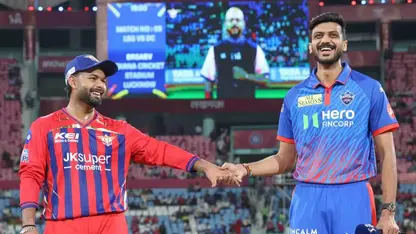

Rishabh Pant and Axar Patel (Source: BCCI/IPL)

Published - 23 Jun 2026, 10:21 PM• Read time - 3 mins
Rishabh Pant has taken a significant financial hit as he prepares for a fresh chapter in his IPL career with Delhi Capitals (DC). Having been traded back from Lucknow Super Giants (LSG), Pant will now earn INR 15 crore, down from the INR 27 crore he commanded at the 2025 auction. That is a loss of INR 12 crore, or 44.44 per cent, and easily the biggest talking point of the trade.
LSG, meanwhile, have strengthened their spin department with the arrival of Kuldeep Yadav, a move that bolsters their thin spin stocks. But the headline remains Pant’s decision to accept a pay cut rather than test his luck in the auction. Why would a player of his stature agree to such terms? Let us break it down.
1. Performance
Pant’s stint with LSG in IPL 2026 was underwhelming. He managed 312 runs, averaging 28.36 at a strike rate of 138.05, with just one fifty and a duck.
His overall record for LSG was not much better. He scored 581 runs in 26 innings, averaging 26.40 at a strike rate of 135.74, including one hundred, two fifties, and three ducks. With numbers like these, Pant’s market value had dipped. Entering the auction with such recent form, he may not have attracted bids anywhere near the INR 15 crore DC offered.
2. Auction dynamics
The IPL auction is notoriously unpredictable. Big names can swing from record paychecks to bargain buys in the space of a season.
Take Venkatesh Iyer, for example. KKR shelled out INR 23.75 crore for him in 2025 after fierce bidding wars, only to release him later. At the 2026 auction, he fetched just INR 7 crore from RCB.
Sam Curran also serves as a classic example. Punjab Kings paid INR 18.50 crore in 2023 and retained him for 2024. But after being released ahead of 2025, he went under the hammer again and CSK picked him up for just INR 2.40 crore, a staggering 87 per cent pay cut.
Pant, who had once fetched INR 27 crore, likely realised that the auction could have left him with a paycheck far below INR 15 crore. By agreeing to DC’s offer, he secured stability and avoided the risk of a dramatic fall.
3. Absence from India’s white-ball setup
Outside the IPL, Pant does not have a major platform to showcase his T20 credentials. He is currently out of India’s white-ball setup and has even lost his Test vice-captaincy to KL Rahul.
Without international exposure, Pant had no opportunity to rebuild his reputation before the next auction. That lack of visibility may have weighed heavily on his decision. By accepting DC’s deal, he ensured he would remain in the spotlight of a major franchise, giving himself another season to prove his worth as a T20 batter.
Pant’s decision to take a 44.44 per cent pay cut is not just about money. It is about strategy. His recent form, the volatility of the auction, and his absence from India’s white-ball plans all pointed to one conclusion: securing a guaranteed contract with DC was smarter than gambling on the auction.
It is a calculated move. By staying with DC, Pant gets continuity, a familiar environment, and the chance to rebuild his brand as a match-winner. If he delivers in IPL 2027, the financial rewards will follow.