


Tilak Varma’s measured approach meets high‑stakes reality as India enter Super 8
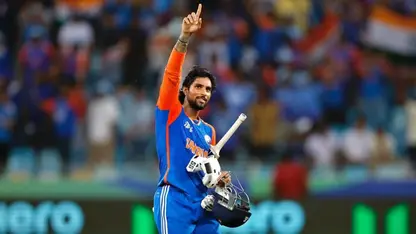

Tilak Varma (Source: TilakVarma9 on IG)

Published - 19 Feb 2026, 10:53 AM• Read time - 3 mins
Tilak Varma’s T20 World Cup has been steady in terms of starts, yet subdued in terms of impact. Across four innings, he has produced scores of 25 off 16 vs USA (strike rate 156.25), 25 off 21 vs Namibia (strike rate 119.04), 25 off 24 vs Pakistan (strike rate 104.16), and 31 off 27 vs Netherlands (strike rate 114.81).
The pattern is unmistakable: Tilak is taking time to settle, but the acceleration that typically follows has not arrived.

This is not a question of ability. Tilak boasts a career T20I strike rate of 141.80, along with two centuries and six fifties in the format. He has the range, the temperament, and the pedigree to influence games decisively. His place in India’s XI is earned, but in this tournament, his tempo has not aligned with the demands of India’s batting template.
India have committed to an approach built on sustained pressure, batters attacking from the outset, forcing bowlers into defensive plans early.
Tilak, however, has operated on a more conservative rhythm, absorbing deliveries upfront without compensating later. In the group stage, this did not hurt India. Their opponents, including USA, Namibia, and Netherlands competed admirably, but India’s depth allowed them to absorb periods of low scoring without consequence.
Even against Pakistan, Tilak’s 24‑ball 25 was overshadowed by Ishan Kishan’s blistering 77 off 40 balls (SR 192.50), an innings that lifted the scoring rate and masked the slowdown at the other end.
India’s world‑class bowling attack has also provided a significant cushion. With Jasprit Bumrah, Varun Chakravarthy, Arshdeep Singh, and Hardik Pandya operating at a high level, India have been able to defend totals and control games even when the batting hasn’t fully clicked.
But as the tournament enters its business end, that safety net cannot be taken for granted. One off‑day with the ball, or one opposition counterattack, can shift the balance quickly.
The tactical concern is sharper when viewed through the lens of India’s middle‑order structure. With Suryakumar Yadav also capable of playing the anchor role, India cannot afford two batters operating in that mode.
Modern T20 cricket has moved beyond dual anchors; the frequency of 200‑plus totals is evidence of a format that rewards constant momentum. If one player anchors, he must still find boundaries consistently. If two do it, the innings risks stalling.
Tilak Varma does not need to overhaul his game. He simply needs to recalibrate his tempo to match India’s intent. India's Super Eight group, featuring South Africa, Zimbabwe, and West Indies, will offer little room for drift. The margins will tighten and India cannot afford to slip into catch‑up cricket because of a slow middle phase.
Tilak has the game. His record proves it. What India need now is for him to bring that game to the fore with clarity, with intent, and with the tempo that the format demands.
