


DRS Explained: How the Decision Review System works in cricket
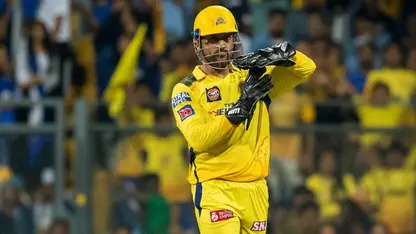

MS Dhoni (Source: X/@ChennaiIPL)

Published - 20 Jun 2026, 10:59 PM• Read time - 4 mins
Over the years, one of the biggest challenges cricket has faced is incorrect umpiring decisions, which have often impacted the outcome of matches. While umpires are human, and expecting them to be 100% accurate at all times is unrealistic, the consequences of incorrect decisions cannot be overlooked.
To address this growing issue, the International Cricket Council (ICC) introduced the Decision Review System, to give players the freedom to challenge the umpire’s decision.
What is DRS?
The DRS system allows teams to challenge on-field umpiring decisions by referring them to the third umpire, who uses high-resolution cameras and various technologies to determine whether the correct decision was made.
When was the DRS introduced?
DRS was earlier called the Player Referral System and was first tested during the Sri Lanka vs India Test series in 2008. It was officially launched by the ICC on 24 November 2009, during the first Test between New Zealand and Pakistan at the University Oval in Dunedin.
It was later introduced in ODIs in January 2011 during Zimbabwe's tour of Australia. The first-ever ICC event to use the DRS was the ODI World Cup 2011 hosted by India, Sri Lanka and Bangladesh. Earlier, the ICC wanted the usage of DRS to be mandatory in all international matches. However, it later made it optional, only to be used if both teams agree.
How is DRS used during a cricket match?
During a match, if a player from the batting or bowling team seems unhappy with the decision by the on-field umpires, he can immediately request them to refer it to the third umpire using the DRS. However, teams only have a limited number of reviews per match, which is two for each innings in ODIs and T20Is. On the other hand, in Test cricket, teams get three reviews per innings since 2020.
From November 2014 onwards, during Australia’s ODI series against South Africa, on-field umpires’ communications began being broadcast to viewers. From then on, whenever a decision is referred to the TV umpire, the dialogue between the on-field and third umpire is also made audible to the audience.
Also Check: What is Powerplay in T20 cricket?
What is the umpire’s call?
While the DRS was introduced to completely eliminate human error from decision-making, the technology had its limitations. To counter that, the ICC introduced the concept of umpire’s call, which comes into play while reviewing the LBW decisions.
At times, when ball-tracking, the technology used to determine the path of the ball after it hits the pads, isn’t able to accurately predict if the ball would’ve actually gone on to hit the stumps or miss it, it keeps the decision the same as the on-field umpire’s call. In such scenarios, whatever decision the umpire gave on the field stays, but the team doesn’t lose their review.
What signal do players make to use DRS?
A fielding team may use the system to challenge a ‘not out’ decision, and a batting team may use it to challenge it after being given out on the field. For the fielding team, only the captain can make the final decision on whether to take DRS by forming a "T" with the arms.
For the batting team, the player who has been dismissed can opt for a DRS challenge after consulting with his teammate at the non-striker’s end and forming a ‘T’ either by using his arms or bat. Players from both teams only have a 15-second window to challenge a decision, post which they have to accept whatever the umpire has decided.
Technologies used in DRS
1 Hawk Eye or the ‘ball-tracking’ system – As mentioned earlier, this technology determines the path of the ball after it has hit the batter’s pad and is widely used in LBW decisions.
3 Hotspot – Hotspot was widely used to determine edges, but isn’t quite common anymore due to logistical and high-cost challenges. It uses infrared imaging technology to detect the heat produced when the cricket ball makes contact with the bat, pad, or glove.
The resulting temperature changes appeared as bright marks, or “hot spots,” on inverted black-and-white images, assisting the third umpire in determining whether an edge or glove contact had occurred.