


Why are cricket bats made from Willow wood?
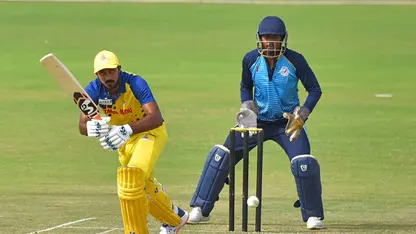

Vijay Shankar bats for Tamil Nadu (Source: Getty Images)

Published - 03 Aug 2026, 09:36 PM• Read time - 2 mins
To play cricket, the most important piece of equipment one requires is the bat. Former Australia fast bowler Dennis Lillee once infamously used an aluminium bat during a Test match between Australia and England in December 1979 at the WACA Ground. Following the incident, it was made mandatory that cricket bats be made only of wood.
They are traditionally made from willow wood, specifically from a variety called cricket bat willow, a type of white willow (Salix alba var. caerulea). The wood is treated with raw (unboiled) linseed oil to improve its durability and protect it from damage.
This variety of willow is the preferred choice as it provides exceptional toughness, along with shock resistance and a lightweight structure, to help it survive the impact of high-speed cricket balls without splintering or suffering significant dents.
Here’s a list of reasons why Willow is used to make cricket bats:
Easy to shape: Bat makers can carve willow into the traditional blade while maintaining its structure. It also responds well to pressing, an important manufacturing process that hardens the bat's surface without removing its natural resistance.
High strength-to-weight ratio: Willow is strong enough to survive repeated impacts of the ball while being light to carry. This allows players to generate faster bat speed without making it heavy.
Excellent shock absorption: A cricket ball is delivered at over 150 km/h (93 mph) by some fast bowlers. Willow compresses slightly on impact, absorbing much of the force instead of transferring it directly to the batter's hands. This reduces vibrations and makes the bat more comfortable to use while facing express pace.
Resistance to splitting: Although willow does dent over time, it is less likely to break than many hardwoods. Its fibrous structure helps prevent consistent cracking.