


Why were Bowl-outs scrapped for the Super Over in cricket?
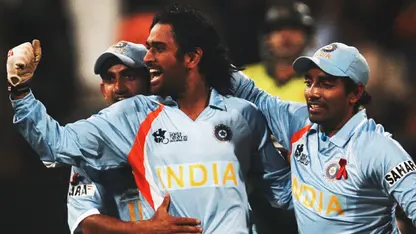

Gautam Gambhir, MS Dhoni, Robin Uthappa (Source: X/@ICC)

Published - 29 Jul 2026, 05:03 AM• Read time - 2 mins
Nothing has revolutionised modern-day cricket more than the T20 format. Ever since T20Is were introduced to international cricket in 2004, the sport underwent several changes to make matches more exciting for the fans. One such concept was the use of ‘bowl out’ to determine the winner of a tied fixture.
In bowl outs, both teams were given five chances to hit the stumps and the side with the most hits would be declared the winner at the end. Bowlers had to deliver the ball in a legitimate bowling action at a fully exposed three stumps.
When did first bowl-out take place?
The first-ever bowl-out in international cricket took place on 16 February 2006, during the one-off T20I between New Zealand and West Indies in Auckland, where New Zealand beat West Indies 3-0.
The International Cricket Council (ICC) had decided that a bowl-out would be used as a tie-breaker for the semifinals and final of the 2006 ICC Champions Trophy and the 2007 Cricket World Cup. However, it wasn’t needed in either tournament.
The first-ever bowl-out in an ICC event took place during the ICC World T20 in 2007 during a match between arch-rivals India and Pakistan, a game which is now etched in the memory of cricket fans for its sheer drama.
✅ @virendersehwag
— ICC (@ICC) September 14, 2018
❌ @YasArafat12
✅ @harbhajan_singh
❌ @mdk_gul
✅ @robbieuthappa
❌ @SAfridiOfficial#OnThisDay in 2007 India v Pakistan at #WT20 finished in a tie… and India won the bowl-out! pic.twitter.com/sN2dZMyLN2
ICC brings a change in laws
At the ICC Annual Conference in 2008, the governing body decided to replace the bowl-out with a one-over eliminator, also known as the Super Over, beginning with the 2009 ICC Champions Trophy in South Africa.
The major reason behind scrapping the bowl-out was that it wasn’t testing teams in all three aspects of the game after the match was tied, since batting and fielding had no role to play in it.
The first-ever super over in international cricket was used during the first T20I between New Zealand and West Indies on December 26, 2008, in Auckland. The method is now used all over the world in every format to determine the result of tied matches.