


Why cricket switched to zing LED stumps and bails | Explained
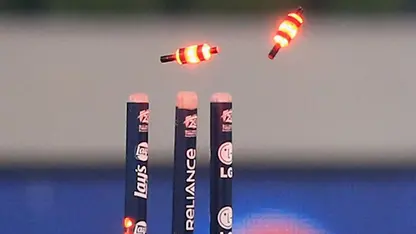

Zing bails and stumps (Source: Getty Images)

Published - 05 Sep 2026, 05:31 PM• Read time - 2 mins
Cricket, like many other sports worldwide, has been fairly circumspect in embracing new technology. The introduction of the DRS marked a groundbreaking moment for the sport, reducing the margin for error and improving overall decision‑making.
Similarly, cricket relied on wooden bails and stumps since its inception, but in 2013 the International Cricket Council (ICC) approved the switch to Zing bails and stumps equipped with Light Emitting Diodes (LEDs), ushering in a remarkable transformation.
Zing International, an Australian company, pioneered this breakthrough technology, commonly known as Zing Cricket Wicket.
Who conceived the technology?
David Ligertwood, director of Zing International, shared the fascinating story behind the inception of the technology. His business partner, Bronte Eckermann, drew inspiration from his daughter’s illuminating LED toy and realised the concept could be integrated into stumps and bails so they would flash the moment a bowler dislodged them.
The stumps and bails are made of composite plastic embedded with LED lights, which emit a bright red flash as soon as they are separated from the stumps.
Are Zings more helpful compared to traditional wooden stumps?
The introduction of Zing bails helped the ICC and other cricket governing bodies eliminate an issue that had troubled the sport for decades. Maintaining near‑perfect accuracy in adjudicating run‑outs and stumpings had long been a challenge, but Zings changed the landscape entirely.
Despite wide camera angles, umpires often struggled to pinpoint the exact moment wooden bails left their grooves. Zings solved this problem with their built-in LEDs, which light up instantly when both ends of a bail lose contact with the stumps. The 2014 ICC Men’s T20 World Cup in Bangladesh became the first multi‑nation tournament to use the technology.
Notably, the biggest challenge in manufacturing the technology was to make the stumps and bails withstand the impact of a delivery as quick as 160 kph.