


KKR’s INR 25 crore gamble on Cameron Green: Why it may not succeed in IPL’s modern avatar
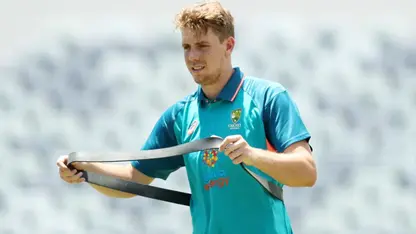

Cameron Green (Source: Getty Images)

Published - 14 Apr 2026, 02:56 PM• Read time - 3 mins
Impact Player rule and the decline of allrounders
Since the Impact Player rule was introduced in IPL 2023, the currency of allrounders has dipped. Teams now prefer specialists who can plug precise gaps rather than banking on utility players. The 19th edition has been a case study in this shift:

- Match 3 (RR vs CSK, Guwahati): CSK, tottering at 19/3, brought in Sarfaraz Khan, a specialist batter, instead of an allrounder. The logic was simple: shore up the batting with a pure run‑maker rather than gamble on a utility option.
- Match 4 (PBKS vs GT, Mullanpur): Titans, defending 162, opted for Prasidh Krishna, an out‑and‑out pacer, as their Impact Player, over a bowling allrounder.
- Match 5 (LSG vs DC): LSG substituted Mitchell Marsh with Shahbaz Ahmed, a batting allrounder. Shahbaz managed only 16* off 15 balls and was asked to bowl a single over, conceding 16 runs. LSG lost defending 141, suggesting a specialist bowler might have been the sharper call given Delhi were 26/4 at one stage.
- Match 16 (RCB vs RR): RCB swapped Devdutt Padikkal for Venkatesh Iyer, a batting allrounder. Iyer’s 29* off 15 balls added runs, but RCB’s bowling lacked bite, and RR chased 201 with ease.
Barring these exceptions, franchises have consistently leaned on specialists. In this modern avatar of the IPL, the premium once attached to allrounders has eroded, making KKR’s ₹25 crore punt on Cameron Green appear out of sync with the prevailing trend.
Green’s fitness record: Resilience amid misfortune
Cameron Green’s career has been punctuated by injuries, yet his ability to perform at the highest level despite these setbacks is commendable. His resilience deserves recognition, but the recurrence of fitness issues inevitably raises questions about sustained availability in a league that prizes reliability.
- Until KKR’s fourth game of IPL 2026, Green was unavailable to bowl due to a lower‑back injury he was managing, as confirmed by Cricket Australia.
- In October 2025, he missed the ODI series against India with side soreness.
- In September 2024, he sustained a back injury during an ODI series against England, underwent lower spine surgery, and missed 15 months of Test cricket.
- He also lives with a chronic kidney condition, carefully managing his diet to maintain peak performance.
These are not criticisms but facts illustrating the challenges Green has faced. His ability to compete despite such hurdles is laudable. However, for an INR 25 crore investment, franchises expect consistent availability, and his fitness history adds an element of risk to KKR’s gamble.
Bowling limitations in T20 cricket
Green’s bowling in T20s remains a work in progress. In 74 T20 matches, he has bowled over 100 overs, claiming 31 wickets while conceding 1063 runs at an economy of 9.19.
These numbers suggest he has yet to establish himself as a reliable bowling option in the shortest format.
Even in IPL 2026, his performance has been mixed. Against LSG on April 9, he conceded 28 runs in two overs at an economy of 14, though he did dismiss Rishabh Pant. Such figures underline the challenge of justifying his price tag as an allrounder when specialist bowlers are delivering tighter spells.
The Impact Player rule has redefined team strategies, reducing the reliance on allrounders and elevating the value of specialists. Green, despite his undeniable talent and resilience, faces challenges in aligning with this modern IPL template. His fitness record, coupled with unproven bowling impact in T20s, makes KKR’s INR 25 crore investment a high‑risk gamble.
In a league where specialists are increasingly trusted to deliver under pressure, Green’s profile may not provide the consistent returns KKR envisioned. The question remains: will this gamble pay off, or will it stand as a cautionary tale in the IPL’s modern avatar?
