


Dissecting RCB’s 202-run pursuit: A statement chase that defined IPL 2026’s opening night
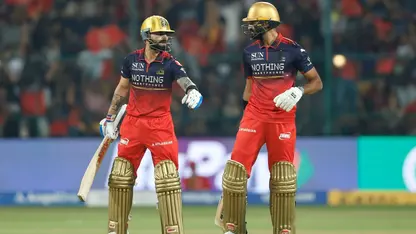

Virat Kohli and Devdutt Padikkal (Source: BCCI/IPL)

Published - 30 Mar 2026, 11:07 AM• Read time - 3 mins
Royal Challengers Bengaluru (RCB) began their title defence in IPL 2026 with a statement against Sunrisers Hyderabad (SRH) that reverberated across the league. Chasing 202 in the curtain raiser at the M Chinnaswamy Stadium, they registered the fastest 200+ chase in IPL history.
This performance not only set the ceiling for the season but also carried immense emotional weight, given the tragic stampede at the same venue during last year’s celebrations.

This was not just a chase; it was a masterclass in personnel selection, intent, and game management.
Choosing the right personnel
The decision to back Devdutt Padikkal ahead of Venkatesh Iyer was pivotal. Padikkal arrived on the back of a prolific domestic season, 543 runs in Ranji Trophy at 60.33, 725 in Vijay Hazare at 90.62, and a blistering SMAT campaign striking at 167.
His form demanded acknowledgement, and RCB resisted the temptation of fielding their INR 7 crore auction buy, Iyer. That call proved decisive. Padikkal’s 26-ball 61 at a strike rate of 234.61 was the innings that broke SRH’s spine. His ability to translate domestic dominance into IPL fireworks justified the management’s faith and set the tone for the chase.
Uncompromising intent despite early setback
Phil Salt’s dismissal in the second over could have triggered caution. Instead, Padikkal went full throttle, reaching his fifty in just 21 balls, the fastest of his IPL career. His assault left SRH scrambling, and when Rajat Patidar followed with a 12-ball 31, the visitors were effectively out of the contest.
This phase underscored RCB’s refusal to let the asking rate climb. By attacking relentlessly, they ensured SRH never had a window to claw back.
Controlling the asking rate
Chasing 202 meant a required rate of 10.1 per over. Yet, by the time Padikkal and Kohli’s 101-run stand ended, the equation had eased to 8.12. Patidar’s cameo further reduced the target to a run-a-ball scenario, leaving RCB with just 39 needed off 46 deliveries.
3⃣1⃣ off 1⃣2⃣ 💪
— IndianPremierLeague (@IPL) March 28, 2026
That was an impactful knock from #RCB captain Rajat Patidar in the chase 🔥
Updates ▶️ https://t.co/Eo5z0jh4K4 #TATAIPL | #KhelBindaas | #RCBvSRH | @RCBTweets | @rrjjt_01 pic.twitter.com/9gSJwRjQYN
This was textbook chase management: front-loading risk to flatten the asking rate, then cruising home with minimal pressure.
The anchor’s role: Virat Kohli
Elegance 🤝 Authority
— IndianPremierLeague (@IPL) March 28, 2026
🎥 Virat Kohli treating Bengaluru with his masterclass 👌
Which was your favourite out of the two? ✍️
Updates ▶️ https://t.co/Eo5z0jh4K4 #TATAIPL | #KhelBindaas | #RCBvSRH | @RCBTweets | @imVkohli pic.twitter.com/7PDI6SldbD
Kohli’s unbeaten hand was the glue. He adapted seamlessly, shelving his initial plan to attack once Padikkal found rhythm. Instead, he rotated strike, picked boundaries judiciously, and ensured stability when wickets fell in the 13th over.
His post-match words revealed the thought process: “I had plans of going aggressive in the powerplay, but when I saw him play, I was like, keep putting him back on strike and hit the odd boundary here and there.”
This was vintage Kohli, ego-less, pragmatic, and team-first. His ability to anchor while others played high-risk cricket ensured the chase never veered off course.
