


Salman Agha’s course correction: Pakistan's T20I captain turns scrutiny into substance
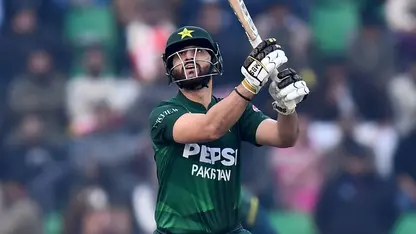

Salman Ali Agha (Source: PCB on X)

Published - 31 Jan 2026, 07:05 PM• Read time - 4 mins
Salman Agha’s captaincy tenure has already lived several lifetimes. Appointed in March 2025 after Pakistan’s Champions Trophy debacle, he stepped into the role with modest numbers and heavy scrutiny.
In six T20Is before taking charge, he had managed just 50 runs at an average of 10.00 and a strike rate under 80, alongside two wickets. The appointment raised eyebrows, and the early months did little to ease the noise.

Baptism of fire
His first assignment was a five‑match tour of New Zealand, and it offered little respite. Pakistan lost the series 4–1, and the criticism intensified. Yet beneath the scoreline lay a detail many overlooked: Salman finished as Pakistan’s leading run‑scorer and the second‑highest overall, compiling 167 runs at 41.75 with a strike rate of 135.77, including two half‑centuries. But it wasn’t enough to shift media sentiment.
The Asia Cup 2025 final against India, however, became the defining flashpoint. Salman endured a poor tournament, aggregating 72 runs in seven innings at a strike rate of 80.89, and his tactical decisions in the final drew ire.
On a surface aiding spin, he chose not to bowl himself despite favourable match‑ups, particularly against Tilak Varma, who anchored India’s chase, and Shivam Dube, as the duo snatched the game away from Pakistan's grasp.
Captain G ur a off spinner too.. 🤯😇 #asiacup2025final
— Mohammad Hafeez (@MHafeez22) September 28, 2025
Former players, including Mohammad Hafeez, questioned his game awareness. At the same time, several sections of the media criticised his conservative batting approach, accusing him of failing to embody the “fearless cricket” he had promised when he replaced Mohammad Rizwan as captain.
His own words, about intent, modern tempo, and backing a young team to play high‑risk cricket, were thrown back at him. By the end of 2025, Salman Agha was a captain living on borrowed time.
New Year, new Salman
Then came 2026 and with it, a striking transformation. During the tour of Sri Lanka, Salman promoted himself to No. 3, signalling a shift in mindset. His 11‑ball 16 in Dambulla hinted in the series opener hinted at a new intent, but the real statement arrived in the series decider on January 11.
Chasing 161 in 12 overs, he unleashed a blistering 12‑ball 45, peppered with five fours and three sixes. The innings didn’t secure victory, but it did something arguably more important: it announced a conscious recalibration of his game.
Returning home, he has carried that momentum into the T20I series against Australia and has made a conscious effort to utilize the powerplay to its fullest. In Lahore, with Pakistan 0/1 in the first match, Salman resisted the temptation to retreat into caution.
His 39 off 27 set up a defendable total and a 22‑run win. On Saturday (January 31), he produced arguably the finest innings of his T20I career, a commanding 76 off 40, striking at 190, dismantling Australia’s attack with authority.
Captain’s knock! Salman Ali Agha smashes Matthew Kuhnemann for 6️⃣,4️⃣,4️⃣🔥
— Pakistan Cricket (@TheRealPCB) January 31, 2026
📺 Watch live in the UK region, sign up now at https://t.co/Z0RXSR7gYM#PAKvAUS | #MateWeAreReady | #BackTheBoysInGreen pic.twitter.com/RJPyVZGRA3
When he departed at 125/4, Pakistan still had 43 balls left, a testament to the platform he had built.
🔥 Skipper on fire! Salman Ali Agha hits 3️⃣ FOURS off Xavier Bartlett 🏏
— Pakistan Cricket (@TheRealPCB) January 31, 2026
📺 Watch live in the UK region, sign up now at https://t.co/Z0RXSR7gYM#PAKvAUS | #MateWeAreReady | #BackTheBoysInGreen pic.twitter.com/sNtGBYGcuD
A notable difference in his leadership was evident as he appeared more proactive than reactive. Reading the conditions astutely, he leaned heavily on spin, recognising Australia’s discomfort.
He resisted bowling Faheem Ashraf unnecessarily and used Naseem Shah for a solitary over, trusting the surface and the match‑ups. The result was emphatic: a 90‑run victory, Pakistan’s first T20I series win over Australia since 2018 and their first ever on home soil.
As Pakistan stand on the brink of inflicting a clean sweep, Salman Agha finds himself in a very different place from where he began. His Player of the Match award in the second T20I felt symbolic, a moment of redemption earned through intent, adaptability, and leadership.
Salman Agha’s resurgence hasn’t erased the questions around him, but it has given them a new context. His recent performances point to a captain finding balance between intent and execution, and to a player more aligned with the demands of modern T20 cricket ahead of the World Cup.
