


A deep dive into Steve Smith's trigger movement
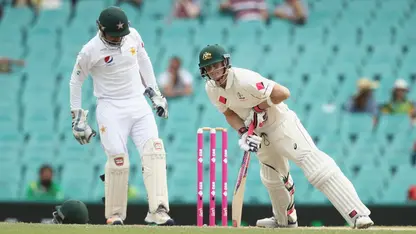

Steve Smith's trigger movement (Source: Getty Images)

Published - 14 Oct 2026, 11:54 PM• Read time - 4 mins
tSteve Smith is the best Test batter of this generation, and those aren't the words of any Tom, Dick or Harry. They belong to his contemporary and one of his biggest on-field rivals, Virat Kohli.
Virat's expressions of admiration for Smith came before the start of the ICC World Test Championship final of 2023 between India and Australia: "According to me, Steve Smith is the best Test player of this generation. He has displayed that; his adaptability is absolutely brilliant," Kohli told Star Sports.
"Everybody knows his record: in 85-90 Tests, he has an average of 60, which is quite unbelievable. The consistency and impact with which he scores runs, I haven't seen any Test player doing that in the last 10 years. It is a credit to his skill and temperament."
Fondly known as Smudge, Smith's majestic Test record is food for thought and leaves many asking the same question: 'How is Steve Smith so successful as a Test batter? '
Well, the answer lies in his trigger movement. For the unversed, a batter's trigger movement is the repetitive motion made by him as soon as the bowler comes into his delivery stride. It becomes a part of a batter's muscle memory.
Smith's trigger movement and mannerisms at the crease are inimitable and something he should get patented if he hasn't already.
He has an exaggerated back-and-across trigger movement that sees him shuffle from leg stump, at times even outside of leg stump to outside off stump (if the line of the ball is outside off).
How does Steve Smith handle bouncers with such a big trigger movement?
Smith's back-and-across movement gets him into a position wherein he can use the pace of the short-pitched ball and help it on its way on the leg-side, often targeting the fine-leg boundary, the shortest boundary fence in terms of dimensions to go aerially.
Compare it to a batter who stays dead still while facing the bouncer. Such a batter is more likely to top-edge his pull or hook shot, as he can't get inside the line of the ball to use pace on the ball and has to generate his own power. The ball is more likely to go to square leg or midwicket - a comparatively bigger boundary dimension compared to the fine-leg fence.
Doesn't Steve Smith's trigger movement force him to play at deliveries outside off and bring the slip cordon into play?
No. It doesn't. Smith is very choosy when it comes to playing the cover drive - a shot he seldom executes. Unless the ball is right in his arc, Smith doesn't unfurl his cover drive, substantially reducing the chances of getting caught behind. Despite shuffling so far across, he leaves unnecessary balls as prudently as a batter batting with a leg-stump guard would do while manning his off-stump.
Doesn't Steve Smith's trigger movement make him an LBW candidate?
That's where Steven Smith's genius comes to the fore. While most other batters, shuffling across to their off-stump, more often than not get hit flush on their pads and adjudged plumb in front, Smith, an outlier, relishes it when a pacer targets his pads or leg stump to get rid of him.
Smith has a very steady head, and his hand-eye coordination is among the best in the cricketing universe. It was on exhibition when he returned a full-blooded serve from Novak Djokovic during a charity match at the Australian Open in 2024.
It's that hand-eye coordination which allows him to effortlessly whip balls in line with his middle and leg stump through the right of mid-on to the boundary. It's not that the opposition hasn't tried to target his stumps, but since he's so good at caressing them on the leg-side, he rarely misses such an opportunity.
Did Steve Smith always have such an eccentric trigger movement?
Nope. During his initial years for Australia, Smith was also one of those thousands of batters who would ask for a middle guard from the umpire and bat with no preliminary movement. While he still knew where his off stump was back then, it was comparatively easier for bowlers to lure him forward and nick him off outside off-stump.
But unlike those thousands of batters who die wondering, Smith tinkered and imbibed the famous phrase of the Civil rights campaigner and feminist writer, Rita Mae Brown: ‘Insanity is doing the same thing over and over again and expecting different results.’