


'Impact' that hurts: How IPL's contentious rule weakens cricket's balance
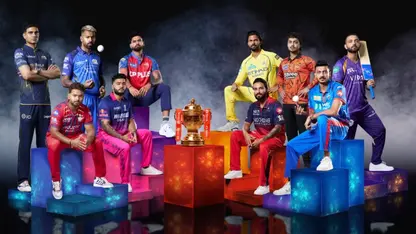

IPL 2026 Captains (Image Source: @ipl/x)

Published - 28 Mar 2026, 04:23 PM• Read time - 4 mins
The Impact Player rule is one of the most contentious and hotly debated topics in cricket, and as the 19th edition of the IPL is set to roll with a clash between the defending champions RCB and SRH on Saturday, March 28, it is bound to polarise more opinions.
Takes allrounders out of the equation
Arguably, the biggest flaw of the rule is its erosion of the allrounder’s role. Teams rarely name an allrounder among substitutes, preferring instead to rely on a specialist batter or bowler. As a result, only those versatile players good enough to make the XI outright get a look‑in, while others spend entire seasons warming the bench.

Alters the inherent nature of cricket
Cricket’s rhythm is built on finite resources, i.e., 11 vs 11. If a side defending a modest total has dismissed all designated batters, it deserves the spoils. Under the Impact Player rule, however, a chasing team can parachute in a frontline batter who wasn’t part of the original XI, suddenly threatening to tilt the contest. This distorts the natural arc of the game and denies the bowling side its earned advantage.
Scrapped in its genesis tournament
If the rule were truly indispensable, it would have endured in domestic cricket. Yet the Syed Mushtaq Ali Trophy, where it was first trialled in 2022, has already abandoned it. Delhi were the first to use it, replacing opener Hiten Dalal with off‑spinner Hrithik Shokeen against Manipur in Jaipur. But by 2024, the tournament had discontinued the experiment, raising doubts about why the IPL persists with what its own feeder competition has rejected.
India’s search beyond Hardik
Hardik Pandya remains the fulcrum of India’s white‑ball sides. His absence from the 2023 ODI World Cup after an ankle injury against Bangladesh exposed the fragility of India’s balance. The search for successors, Nitish Reddy and Shivam Dube among them, has yet to yield a settled option. The Impact Player rule, by reducing opportunities for emerging allrounders to contribute in both disciplines, only deepens the problem. What benefits franchises tactically may hinder India strategically.
Leaves bowlers licking their wounds
The numbers tell their own story. Since the rule’s introduction, the 250‑run mark has been breached 11 times, five by SRH alone, compared to just once in the first 15 years of the IPL.
Average scoring rates have climbed from 8.99 runs per over in 2023 to 9.62 in 2025. Bowlers are being pounded, with little respite.
Mitchell Starc captured the mood during IPL 2024: "The Impact Player rule changes things a fair bit," Starc said at a press conference. "Everyone gets to bat a lot deeper having a batting and a bowling XI. There's a lot made of that rule throughout the tournament and there's been a lot of high scores, which is the nature of the wickets and the grounds we play on here. When you have batters and batting allrounders come in at Nos. 8 or 9, it's a long batting line-up."
The sheer weight of voices against it
Lastly, several prominent players have been severely critical of their opinions against the Impact Player rule.
"Personally, for me, I don't think there should be an impact player. I think cricket in general is an 11-player game. And on wickets where we play, on the grounds that we play, adding an extra batsman, I think it takes the skill out of the game," Shubman Gill said during the Gujarat Titans’ 2026 pre-season press conference.
"I generally feel that it is going to hold back [development of allrounders] because eventually cricket is played by 11 players, not 12 players," Rohit Sharma said during his appearance on the Club Prairie Fire Podcast in April 2024. "I'm not a big fan of impact player. You are taking out so much from the game just to make it little entertainment for the people around. But if you look [at] genuinely just cricketing aspect of it…. I can give you so many examples - guys like Washington Sundar, Shivam Dube are not getting to bowl, which for us [India team] is not a good thing."
"From a player's point and a coach's point of view, the game would be much easier if you just pick 11, just pick your best 11 and put the 11 on the park and go and play," Ricky Ponting told ESPNcricinfo during an interaction in April 2024. "Because I'll tell you now, we'll sit back after training tonight and select our teams and you've got to pick two teams and you've got to have your five impact guys. There's so many different ways you can go around doing that, looking at different combinations. It actually can be a bit of a nightmare."
Gill, Rohit, and Ponting are not ordinary names. They are leaders of the game, tactically astute and respected voices whose judgment carries weight across dressing rooms and commentary boxes alike. When figures of such stature publicly call out a rule, it signals a deeper fault line that cannot be ignored.
