


CSK's triple playoff failure: The anatomy of a dynasty in decline
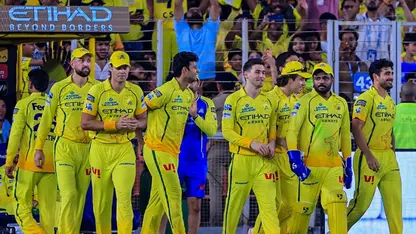

Chennai Super Kings (Source: @Chennaiipl on Instagram)

Published - 22 May 2026, 02:30 AM• Read time - 4 mins
Chennai Super Kings (CSK) entered the match no. 66 of the ongoing IPL season against Gujarat Titans (GT) with one clear agenda: secure two valuable points and give themselves the best possible chance of qualifying for the playoffs.
Instead, they lost the game, the playoff berth, and a measure of pride as one of the IPL’s great dynasties.

The five-time winners were not merely beaten; they were humbled by the hosts in front of a capacity crowd at the Narendra Modi Stadium, where CSK fans clad in yellow jerseys, brimming with hope, had gathered and outnumbered those in navy blue.
Titans registered their biggest win in terms of runs (89) in IPL history, handing CSK a defeat so heavy that it will take time to heal.
But how did a five‑time champion unravel so painfully? Was it the absence of MS Dhoni or the injuries that plagued them? In truth, the seeds of collapse were sown even before the season began.
The mistake of placing all bets on one horse
CSK retained Nathan Ellis for INR 2 crore and made the blunder of placing the entire pace workload on his shoulders. Ellis had earned respect after leading Hobart Hurricanes to their maiden BBL title, but over‑reliance on him proved costly.
Ellis aggravated an old hamstring injury in the domestic One‑Day Cup final between Tasmania and New South Wales on March 11, ruling him out for three months. The IPL is a marathon, a test of endurance, and every team needs backups to survive it. CSK’s failure to keep a high‑quality backup hurt them badly.
When life gives you a chance to fix a mistake, don’t commit another
CSK had a golden opportunity to bring in a reliable replacement, but they erred again. Of all available options, they signed Spencer Johnson, the least battle‑hardened. Johnson’s last competitive game was on April 8, 2025, for KKR against LSG. Still recovering, he was only available in late April, after the first leg of the IPL.
He managed just two wickets in three games at an economy of 10.18, and CSK paid the price.
What was the thinking behind Matt Short’s inclusion?
Ahead of IPL 2026, CSK desperately needed a proven middle‑order batter. Instead, they bought opener Matt Short, despite already having three openers in Sanju Samson, skipper Ruturaj Gaikwad and Ayush Mhatre.
Short was able to make a career out of cricket only after Adelaide Strikers promoted him to open in the BBL. CSK had no space for him in their top three, yet they signed him for INR 1.50 crore. Meanwhile, Delhi Capitals secured David Miller, a seasoned middle‑order option, for just INR 2 crore.
CSK played Short ahead of Akeal Hosein in several matches and lost. He finished the season with only 60 runs at a strike rate of 117.64 and no wickets.
Retreat or reconfiguration
Gaikwad, after opening throughout the season, sent Short to partner with Sanju Samson against Titans. The move made little difference; Samson fell first ball, and Gaikwad walked in the very next delivery, effectively as an opener anyway.
Gaikwad might still have failed had he opened, but doing so would have carried weight: a statement of intent that he was willing to shoulder responsibility and drag his team over the line. Instead, his decision to demote himself painted a hesitant picture, smelling more of retreat than reconfiguration.
Acting against their own core belief
Continuity has always been CSK’s hallmark. The enduring presence of Stephen Fleming is proof. He joined CSK in 2008 as a player and became the head coach in 2009, guiding them to multiple IPL and CLT20 titles.
CSK were once mocked as “Dad’s Army” with veterans like Shane Watson, Dwayne Bravo, Harbhajan Singh, and Imran Tahir. But they stuck to their philosophy and were rewarded when that so‑called Dad’s Army proved invincible in 2018.
In stark contrast, CSK this season opted to blood a host of inexperienced youngsters, Kartik Sharma, and Prashant Veer, and entrusted them with middle‑order responsibilities. The IPL is a cauldron, unforgiving to raw talent. While Kartik and Veer showed flashes of flair, consistency is the currency of success, and CSK lacked it.
Their sudden investment in youth was not a natural transition, contrary to what skipper Gaikwad said at the post‑match presentation on Thursday night:
"Not many people buy the fact that we are a young team in transition, with a lot of inexperienced players. More than 8–10 players have played less than 20 games, they've gotten exposure, we've found out what areas we're lacking," said Gaikwad.
CSK have suffered the consequences of acting against their core belief of continuity. The transition that now makes them sweat was engineered by them in the air‑conditioned ambience of the Etihad Arena in Abu Dhabi on December 16.
